Ensuring operational continuity for emergency systems during a structural fire is a fundamental mandate in modern building codes. Under the National Electrical Code (NFPA 70 / NEC), critical circuits—such as emergency lighting, fire pump controls, smoke control systems, and elevator power—must utilize Circuit Integrity (CI) cables capable of maintaining electrical flow under direct flame exposure.
Unlike flame-retardant cables designed merely to prevent flame propagation, 2-hour fire-rated cable assemblies must survive extreme thermal stress followed by severe mechanical impact. Achieving compliance with stringent U.S. standards relies heavily on specialized inorganic barriers and technical textile substrates.
Thermal and mechanical demands: UL 2196 vs. International standards
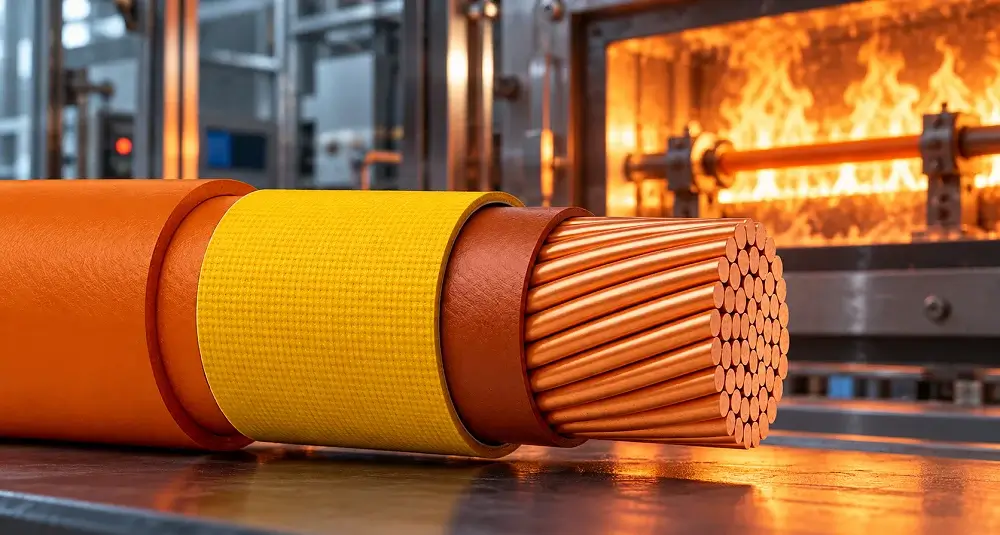
In the United States, Underwriters Laboratories (UL) sets the industry standard through UL 2196 (Standard for Tests for Fire Resistance of Circuit Integrity Cables), widely considered one of the most demanding fire tests globally.
The UL 2196 2-Hour fire test
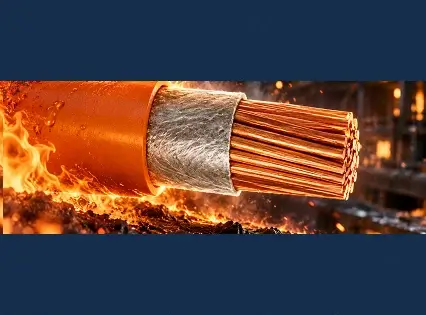
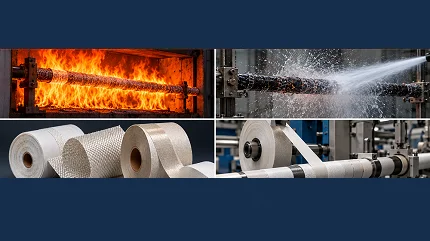
- Extreme Thermal Exposure: The complete cable system is installed in a furnace following the ASTM E119 time-temperature curve, reaching temperatures exceeding 1,850 °F (1,010 °C) over a 2-hour period while energized at rated operational voltage.
- Hose-Stream Impact Test: Immediately following the 2-hour burn, the glowing assembly is subjected to a high-pressure fire hose stream.
- Pass/Fail Criteria: The cable must withstand severe thermal shock, rapid cooling, and kinetic force from the water blast without short-circuiting or losing electrical continuity.
The critical function of technical textile substrates and fire barriers
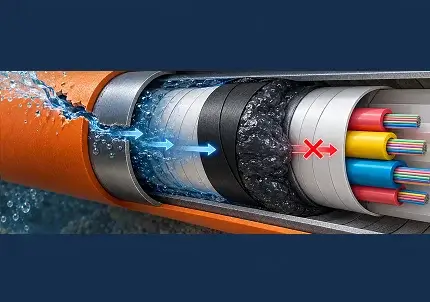
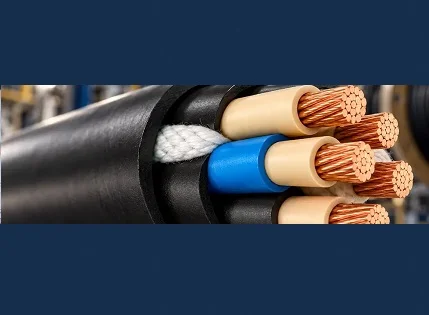
During the initial minutes of a high-temperature fire, outer polymeric jacketing and primary insulation (such as XLPE or PVC) completely decompose. At this stage, cable survival depends entirely on the inorganic protective layers wrapped around the conductors.
1. Residual inorganic dielectric shield
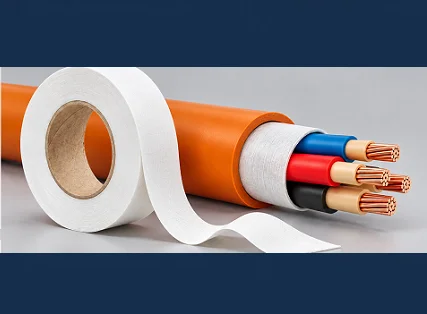
High-temperature mineral tape applied directly over the conductor acts as a ceramic shield. Capable of withstanding temperatures exceeding 1,830 °F (1,000 °C) continuously, these inorganic layers maintain essential dielectric strength and physical separation between conductors when organic materials have burned away.
2. Woven glass fiber backing for structural resilience
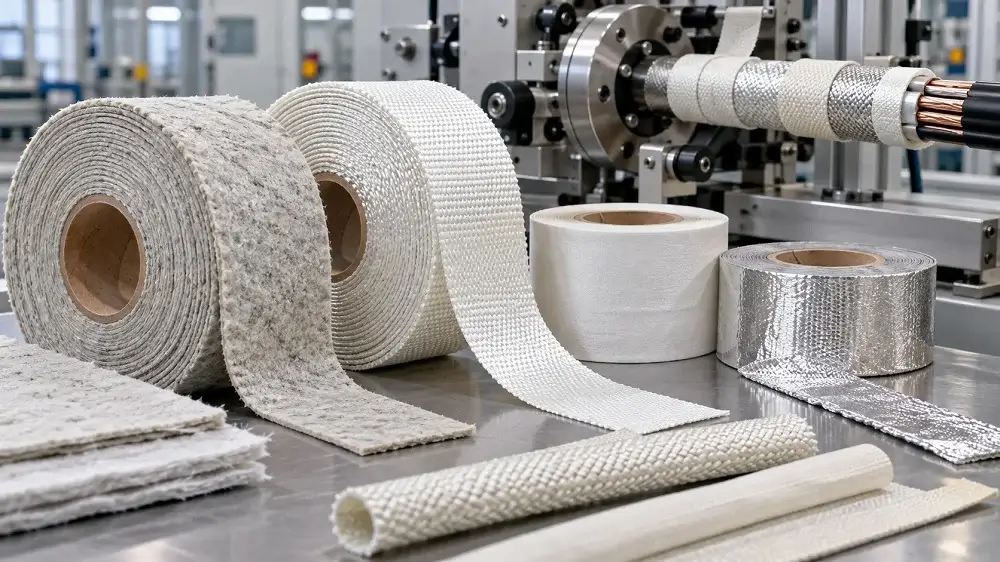
Passing the severe hose-stream portion of UL 2196 requires exceptional mechanical strength. Lamination with woven glass fiber substrates provides vital structural integrity:
- Thermal Shock Resistance: Prevents the vitrified protective layer from flaking, cracking, or washing away under high-pressure water impacts.
- High-Speed Lapping Efficiency: Delivers the high tensile strength required for continuous, high-speed wrapping operations on cable manufacturing lines without breaking or wrinkling.
Low-smoke zero-halogen (LSZH) compatibility
Modern commercial and industrial specifications frequently pair UL 2196 circuit integrity requirements with Low-Smoke Zero-Halogen (LSZH) outer jacketing. The inorganic substrates and technical textile backings supplied by Juan Gili S.L. are chemically inert and fully compatible with clean extrusion compounds, helping prevent the release of toxic gases or dense smoke during a fire event.
Primary industrial and commercial applications
UL 2196 fire-rated CI cable assemblies are specified in high-risk environments throughout North America:
- High-rise commercial, residential, and healthcare structures.
- Underground transit tunnels and railway infrastructure.
- Oil & gas refineries, petrochemical plants, and offshore rigs.
- Power generation stations, industrial foundries, and data centers.
FAQS
A flame-retardant cable prevents fire from spreading along the cable run but ceases to function electrically when burned. A UL 2196 Circuit Integrity (CI) cable maintains continuous power or signal transmission for 2 hours under direct flame and hose-stream exposure.
Unreinforced protective films can become brittle after prolonged extreme thermal exposure. The woven glass fiber technical backing acts as a structural reinforcement, holding the protective barrier intact against high-pressure water impact and mechanical shock.
Yes. Juan Gili S.L. works directly with cable manufacturer engineering teams to supply custom tape widths, basis weights, and technical substrates tailored for high-speed wrapping equipment.