Selecting insulating materials in cable engineering addresses the critical need to ensure dielectric performance under severe thermal conditions. While conventional polymers degrade or combust at elevated temperatures, mica electrical insulation maintains its structural integrity and dielectric strength, preventing catastrophic short circuits.
At Juan Gili S.L., we develop and supply technical textile substrates and components engineered to optimize the application of these mineral tapes in high-speed taping and lapping lines for cable manufacturers.
Physicochemical properties of mineral insulation
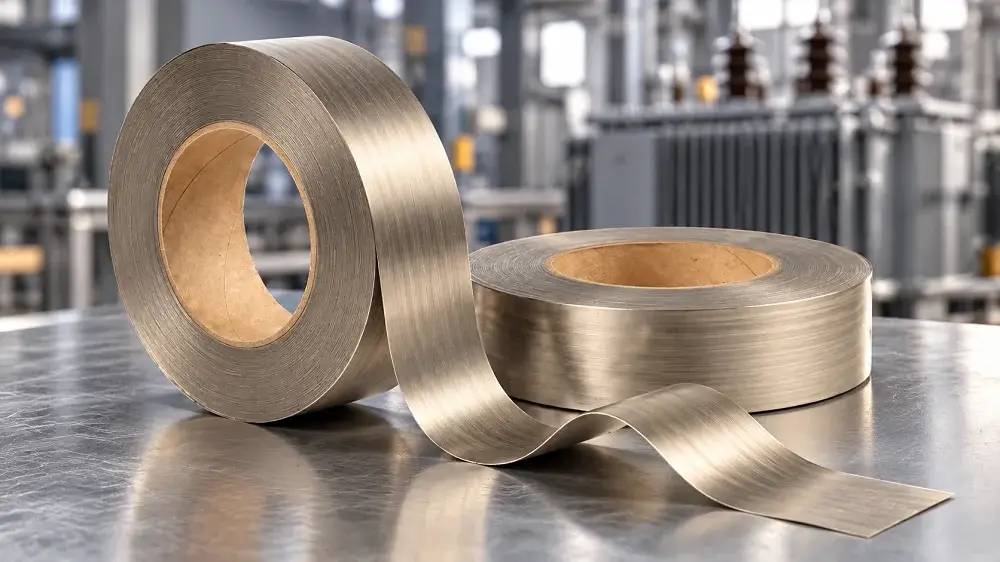
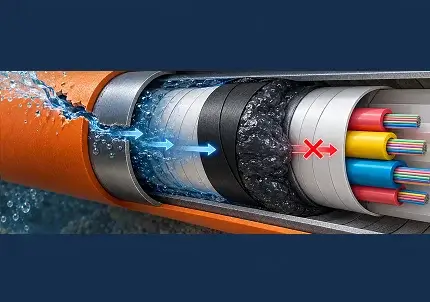
Mica is an aluminosilicate mineral with a sheet-like (laminar) structure that delivers a unique combination of thermal and electrical properties essential for industrial cables:
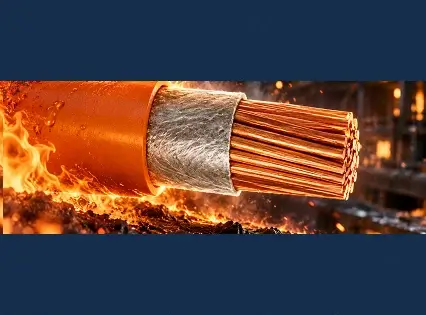
- Inorganic non-combustible structure: Withstands continuous operating temperatures exceeding 1,380 °F (750 °C for Phlogopite) and up to 1,830 °F (1,000 °C) during extreme peaks, retaining its insulating properties even after outer polymer compounds have been consumed by fire.
- High dielectric Strength: Prevents partial discharges and dielectric breakdown in conductors subjected to high electrical fields.
- Chemical and radiation resistance: Exhibits exceptional chemical inertness against solvents, industrial oils, UV radiation, and ozone aging.
Application in fire-resistant cable manufacturing (Circuit integrity cables)
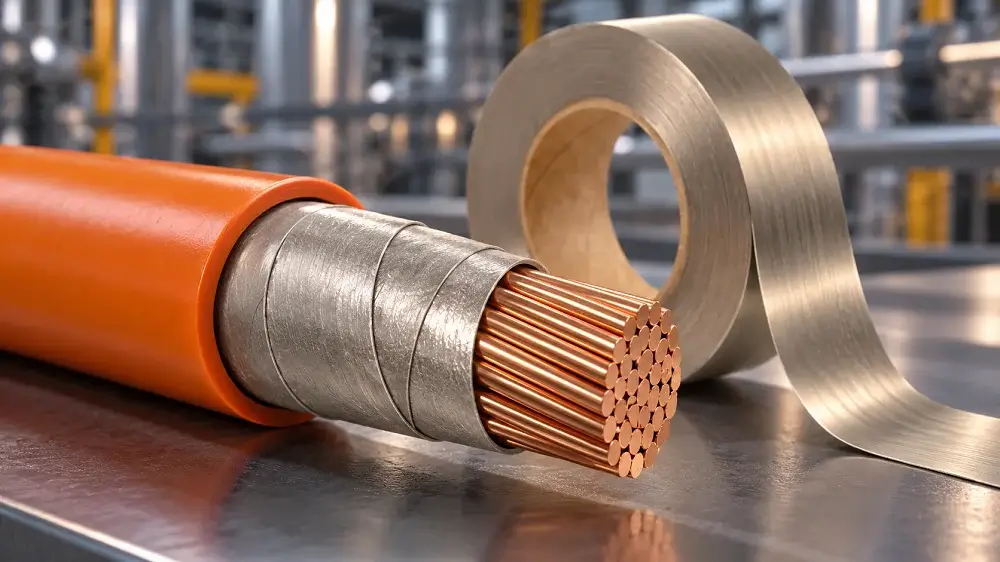
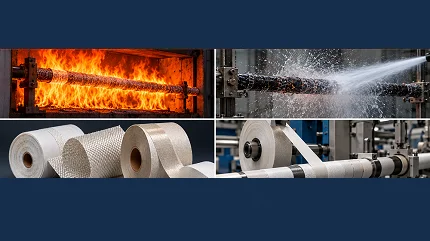
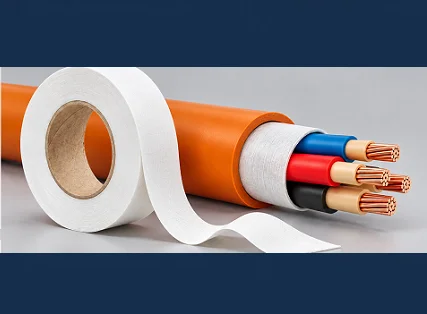
In the design of fire-resistant cables (pursuant to international standards such as IEC 60331 or BS 6387), these inorganic tapes are applied directly over the metallic conductor prior to the extrusion of primary insulation and outer jacketing:
- Residual ceramic barrier: During a fire, the material forms a protective ceramic layer that physically keeps energized conductors separated.
- Continuous operation assurance: Allows critical circuits—such as emergency lighting, smoke extraction systems, and fire pumps—to remain functional for the duration required for evacuation and firefighting operations.
Textile reinforcement and line manufacturability
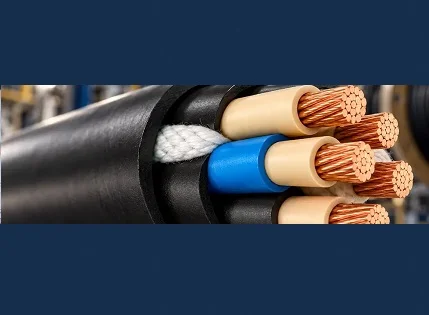
To apply mica electrical insulation efficiently in high-speed manufacturing processes, the vitrified film is laminated with high-strength technical textile backings, such as woven glass fiber or thermally stable synthetic films:
- Mechanical support: The textile backing provides the tensile strength needed to prevent wrinkling or snapping during high-speed lapping.
- Flexibility and uniform overlap: Enables a consistent, homogeneous overlap percentage around the conductor, ensuring continuous dielectric coverage without unnecessarily increasing the cable’s overall outer diameter (OD).
Key industrial applications
This specialized component is essential in sectors where functional safety and thermal resistance are critical priorities:
- Transit infrastructures and underground railway systems.
- Petrochemical plants, refineries, and offshore platforms.
- Power distribution networks in foundries, steel mills, and high-temperature industrial plants.
- Safety and emergency wiring in high-occupancy commercial and industrial buildings.
FAQS
Phlogopite offers superior resistance to extreme temperatures (up to 1,830 °F / 1,000 °C), making it the preferred choice for fire-resistant, circuit-integrity cables. Muscovite, on the other hand, provides slightly higher dielectric strength at ambient temperatures.
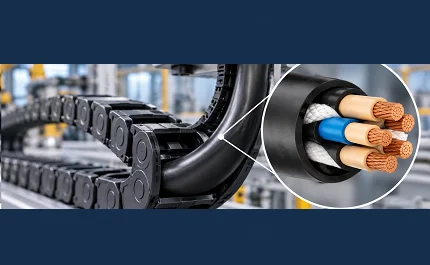
No. Thanks to advanced technical textile backings and optimized tape thickness, the material conforms smoothly to required bend radii without cracking or losing dielectric continuity.
Yes. In fact, it is the standard industry pairing for maximum safety cables: the mineral layer guarantees circuit integrity while LSZH jacketing eliminates toxic gas emissions and dense smoke during a fire.