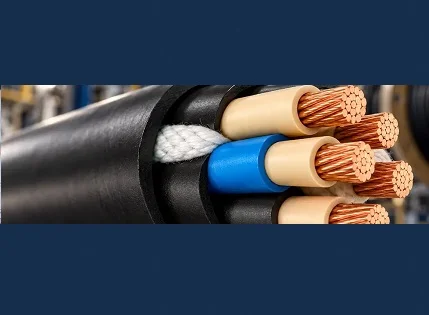
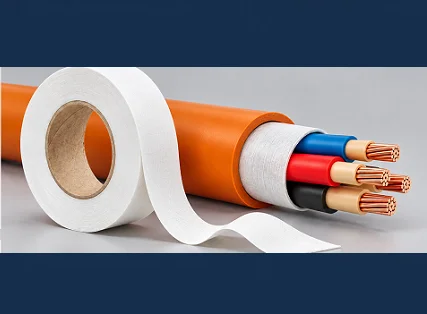
During complex multi-core cabling operations, assembling insulated conductors, shielding foils, and interstitial fillers into a unified cylindrical core presents significant manufacturing challenges. As planetary cabling equipment operates at high rotational speeds, unanchored internal components tend to shift, splay, or deform. Integrating a high-tensile cable core binding tape wraps the core bundle securely, establishing dimensional stability before the assembly enters the extrusion die.
In modern cable manufacturing, employing a specialized non-woven binding tape provides essential mechanical binding without introducing unnecessary bulk, excess weight, or rigid internal stress points.
The dual challenge: core splaying and thermal adhesion
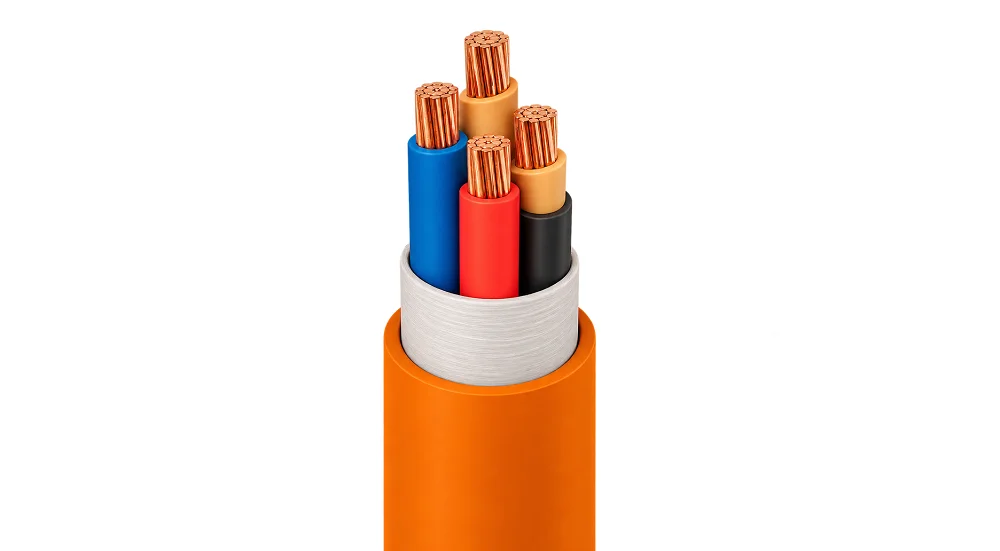
When a cable bundle passes through the jacketing extruder, it encounters two severe processing threats that can jeopardize final product quality:
- Mechanical de-bundling under High tension: High-speed line speeds exert considerable centrifugal and longitudinal forces on multi-core assemblies. Without a dedicated cable core binding tape, individual conductors can drift out of alignment, resulting in non-concentric profiles and variable jacket wall thickness.
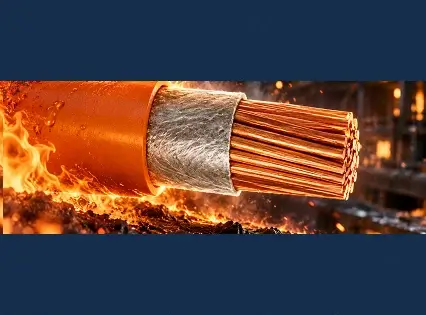
- Polymer fusion and jacket adhesion: Molten outer jacketing materials—such as PVC, PUR, TPE, or XLPE—are applied at elevated processing temperatures. Direct contact between the hot molten polymer and primary conductor insulation can cause thermal degradation or unwanted bonding, making field stripping exceptionally difficult.
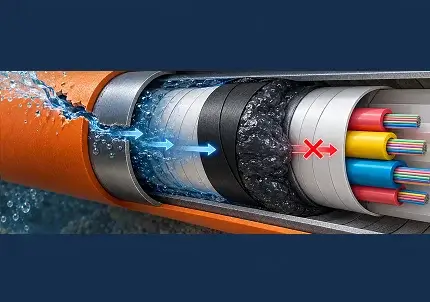
Applying an engineered cable core binding tape forms an impermeable mechanical and thermal barrier, shielding internal components while preserving smooth jacket separation during installation.
Key technical properties of non-woven and reinforced binding tapes
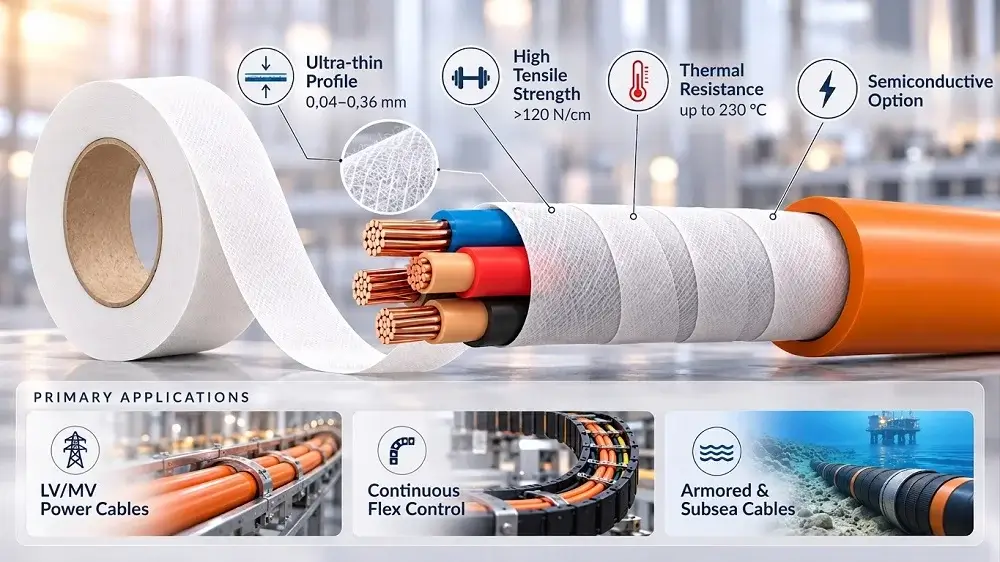
Selecting the correct binding substrate depends on mechanical tension requirements, short-term thermal exposure, and dielectric specifications. Engineered polyester and nylon tapes offer distinct operational advantages:
| Material specification | Technical parameter | Performance impact in cable construction |
| Ultra-thin profile | Thickness from 0.04 mm to 0.36 mm | Maintains target cable outer diameter without adding dead bulk |
| High tensile strength | >20 N/cm to > 150 N/cm (Reinforced) | Prevents tape snapping during high-speed helical or longitudinal wrapping |
| Thermal resistance | Short-term stability up to 230 °C | Withstands direct contact with molten extrusion polymers without shrinking |
| Semi-conductive options | Carbon Black (<1000 Omega Surface Res.) | Supports electrical field stress relief in medium and high-voltage power cables |
Reinforced variants utilizing high-tenacity (HT) polyester yarn grids achieve tensile breaking loads exceeding 120 N/cm. This structural reinforcement ensures that the cable core binding tape holds heavy-gauge conductors in a tight circular geometry under demanding manufacturing conditions.
Compliance with international manufacturing standards
Industrial power cable designs must adhere to strict international quality frameworks, such as IEC standards for electric power cables. These standards govern core compactness, insulation integrity, and thermal endurance. Utilizing a high-purity non-woven binding tape ensures that internal assemblies maintain uniform cross-sectional geometry, meeting rigorous factory acceptance testing (FAT) requirements.
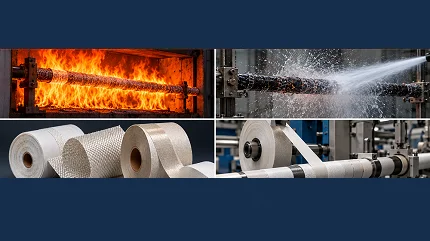
Furthermore, delivering tapes on high-capacity pad spools and jumbo spools (with outer diameters up to 600 mm) substantially reduces production downtime by extending continuous taping runs on automated cabling lines.
Primary applications across industrial cable families
High-performance binding and separator tapes are specified across diverse cable architectures:
- Low and medium-voltage power cables: Binding conductors and core assemblies prior to metallic shielding or outer armoring.
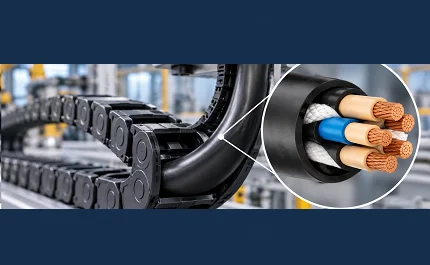
- Continuous-Ffex control cables: Creating a low-friction internal interface that allows free core movement inside drag chains.
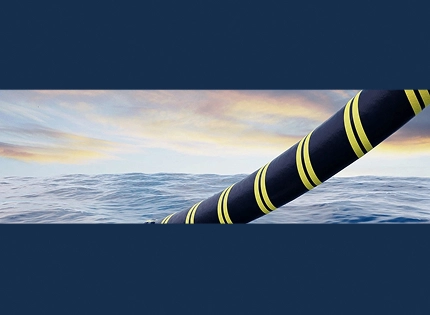
- Armored & subsea cables: Providing heavy-duty mechanical separation and dimensional containment under high-pressure extrusion.
FAQS
The tape acts as a physical thermal barrier between the conductor insulation and the outer sheath. Withstanding short-term extrusion temperatures up to 230 °C, it prevents molten polymers from fusing to inner core insulations.
Yes. Tapes treated with carbon black offer surface resistance levels below $1000\text{ }\Omega$, providing effective semi-conductive performance for voltage stress control and shielding applications.
Reinforced tapes incorporate high-tenacity polyester yarns, providing tensile strength exceeding $120\text{ N/cm}$. This added tensile capacity prevents tape tearing when bundling heavy power conductors at high line speeds.