If you work with cables that will be exposed to moisture or water, you know that a small leak can turn into a big problem: electrical failures, service outages, and even irreversible damage to the installation.
To avoid this, one of the most effective solutions is water blocking tape.
Quick answer:
Water blocking tape is a technical tape with superabsorbent polymers that, when in contact with water, swells and creates an internal barrier inside the cable, stopping the advance of moisture and protecting its functionality.
What is water blocking tape?
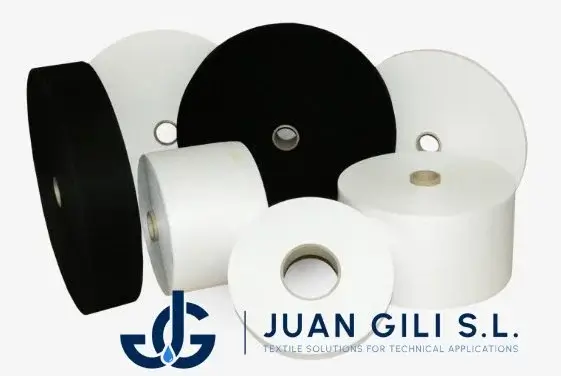
Water blocking tape is a technical tape for waterproof cables, usually made from a nonwoven fabric (such as polyester), which is impregnated with superabsorbent polymers (SAP).
When these polymers detect the presence of water, they expand very quickly, creating a kind of “gel” or continuous barrier that prevents moisture from moving along the inside of the cable.
Thanks to this behavior:
- It protects the internal structure of the cable.
- It maintains electrical continuity even under very demanding conditions.
- It extends the service life of the cable, especially in harsh environments.
How does water blocking tape work?
Its operation can be summed up in three very simple steps:
1.Contact with water
When water enters the cable (microcracks, cuts, splices, etc.), it reaches the water blocking tape.
2.Swelling of the polymers (SAP)
The SAPs absorb the water and swell rapidly, multiplying their initial volume several times over.
3.Formation of a physical barrier
This extra volume fills the free space inside the cable and blocks the advance of moisture, preventing it from reaching other critical points.
The result is automatic protection, without the need for additional external sealing.
Main uses of water blocking tape in the cable industry
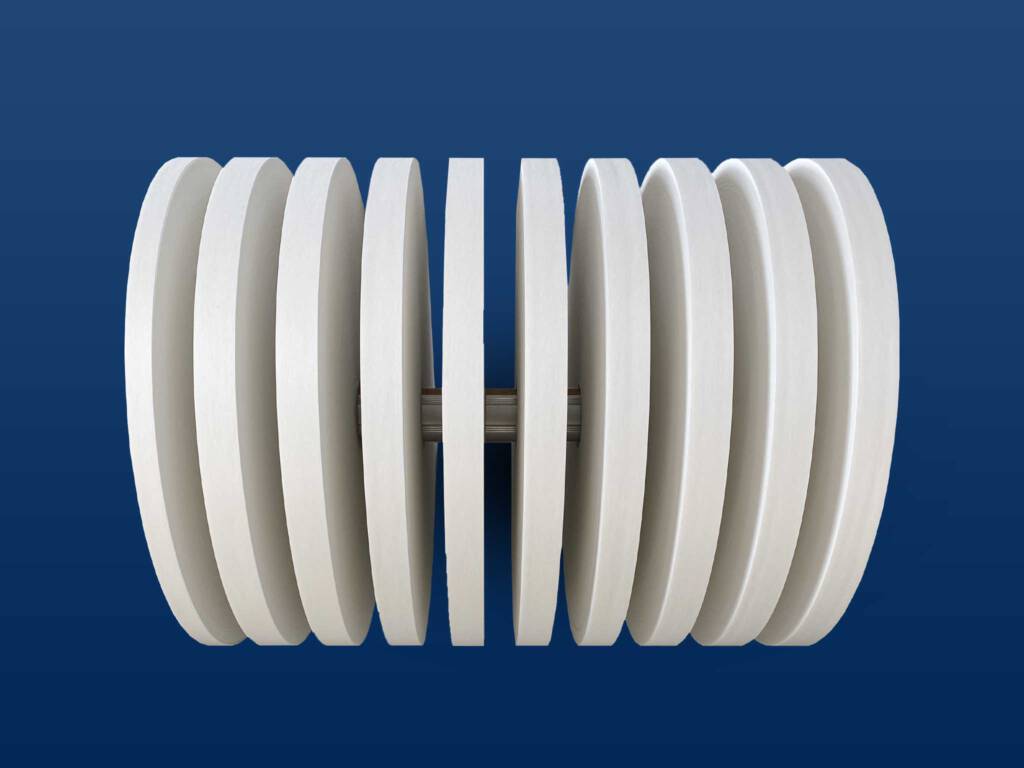
Water blocking tape is used in practically all cables designed to operate in damp environments or where there is a risk of water contact, such as:
- Fiber optic cables
- Power cables installed in underground or outdoor conduits
- Control and signal cables in industrial environments with humidity or condensation
- Cables used in railway, marine and tunnel applications
- Installations in utility galleries, industrial plants and flood-prone areas
In all these cases, water blocking tape acts as a passive internal defense: it’s there, you don’t see it, but it automatically goes to work when water appears.
Key benefits of water blocking tape
Incorporating water blocking tape into cable design provides both technical and operational advantages:
Active protection against moisture
It blocks water from the very first contact, without relying solely on external insulation.
Greater cable durability
It stops the advance of corrosion and internal deterioration of conductors, screens and reinforcing elements.
Fewer failures and less maintenance
It reduces the risk of short circuits, intermittent faults and unplanned downtime.
Easy integration in manufacturing
It is compatible with automatic production lines, without drastic changes to cabling processes.
Cost-effective solution
It is an economical way to increase tightness and overall cable reliability.
Most commonly used types of water blocking tapes
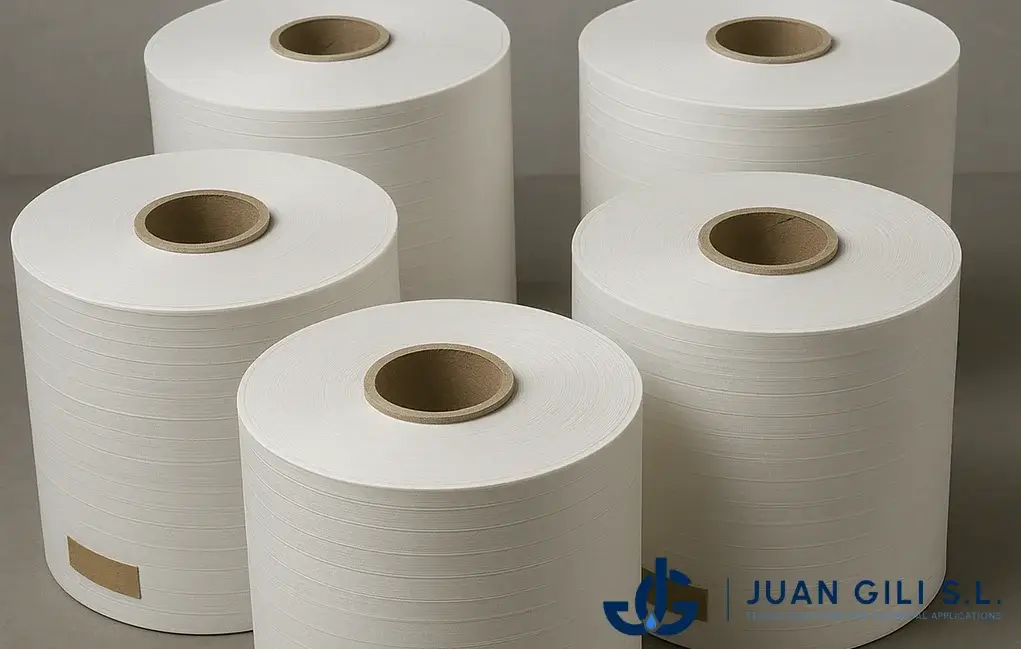
Depending on the application and the required performance level, there are different types of water blocking tape:
1. Single-sided water blocking tape
- Lightweight, flexible structure.
- Ideal for standard applications for moisture protection.
- Used in cables where the risk of water ingress is moderate.
2. Double-sided water blocking tape
- Contains SAP on both sides, which increases swelling capacity.
- Recommended for cables with high exposure to water or greater mechanical demands.
- Very common in directly buried cables or aggressive environments.
3. Special compositions
- Tapes combined with fiberglass or other reinforcements.
- Designed for very harsh environments, where additional mechanical, thermal and chemical resistance is required.
- Can be tailored to specific regulatory requirements for each project or sector.
How to choose the right water blocking tape
When selecting a tape for waterproof cables, it’s important to consider some key technical criteria:
Reaction time to water
Swelling speed is essential in critical installations: the sooner it reacts, the sooner the advance of moisture is stopped.
Absorption capacity
Usually measured in grams of water per square meter, it indicates how much water the tape can absorb.
Thermal and chemical compatibility
It must be compatible with the cable materials (insulation, jackets, screens, fillers) and withstand both service and manufacturing temperature ranges.
Mechanical resistance during the manufacturing process
The tape must easily withstand the tensions, torsion and temperatures of production lines.
Choosing these parameters correctly ensures that the water blocking tape fulfills its role without compromising the design or integrity of the cable.
Why is water blocking tape key in waterproof cables?
Water blocking tape is a solution that is:
- Effective, because it blocks moisture from the inside.
- Discreet, because it does not alter the external design of the cable.
- Economical, because its cost is low compared to the impact of a failure.
Its ability to swell quickly in the presence of water makes it an essential ally to ensure service continuity and safety in harsh environments.
Water blocking tape solutions at Juan Gili S.L.
Are you developing cables that need to withstand exposure to water or extreme humidity conditions?
At Juan Gili S.L. we offer advanced water blocking tape solutions, with:
- Different configurations (single-sided, double-sided, special compositions).
- Various widths and weights, tailored to cable design.
- Alignment with the technical and regulatory requirements of each project.
We support you in selecting the most suitable tape according to the type of cable, its installation environment and the required protection level.
FAQ
What exactly is water blocking tape in a cable?
It is a technical tape with superabsorbent polymers that, upon contact with water, swells and forms an internal barrier that prevents moisture from traveling along the cable.
What is water blocking tape used for?
It is used to protect the inside of the cable against the ingress of water or moisture, reduce failures and extend the service life of the installation.
Is it used in fiber optic cables?
Yes. It is very common in fiber optic cables, especially in underground, outdoor or duct installations with a risk of flooding.
Is it the same as filling the cable with gel?
Not exactly. Gel also blocks the advance of water, but water blocking tape offers a cleaner, lighter solution that is easier to integrate into automatic manufacturing processes.
Can I adapt the tape to my project’s needs?
Yes. It is possible to adjust weight, width, type of backing and formulation according to the mechanical, thermal and regulatory requirements of each project