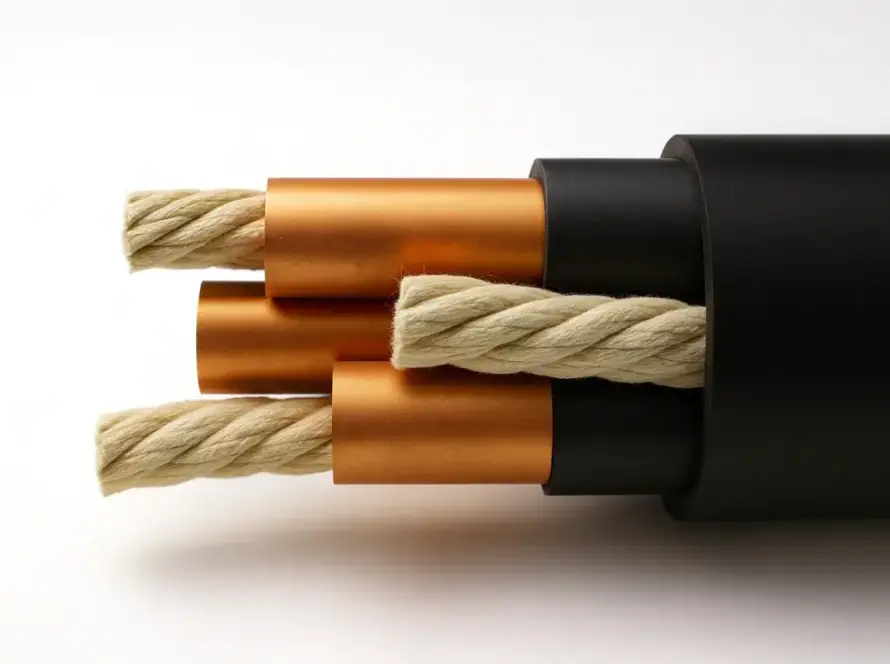
In the manufacturing of telecommunications cables, each internal component has a specific function to ensure durability, ease of installation, and operational safety. Among these components, ripcords —also known as tearing threads— are key elements that allow access to the conductors without damaging the cable during opening.
Two of the most commonly used materials in the industry are polyester and aramid, each with distinct characteristics that make them more or less suitable depending on the cable type and its application environment.
What is a ripcord?
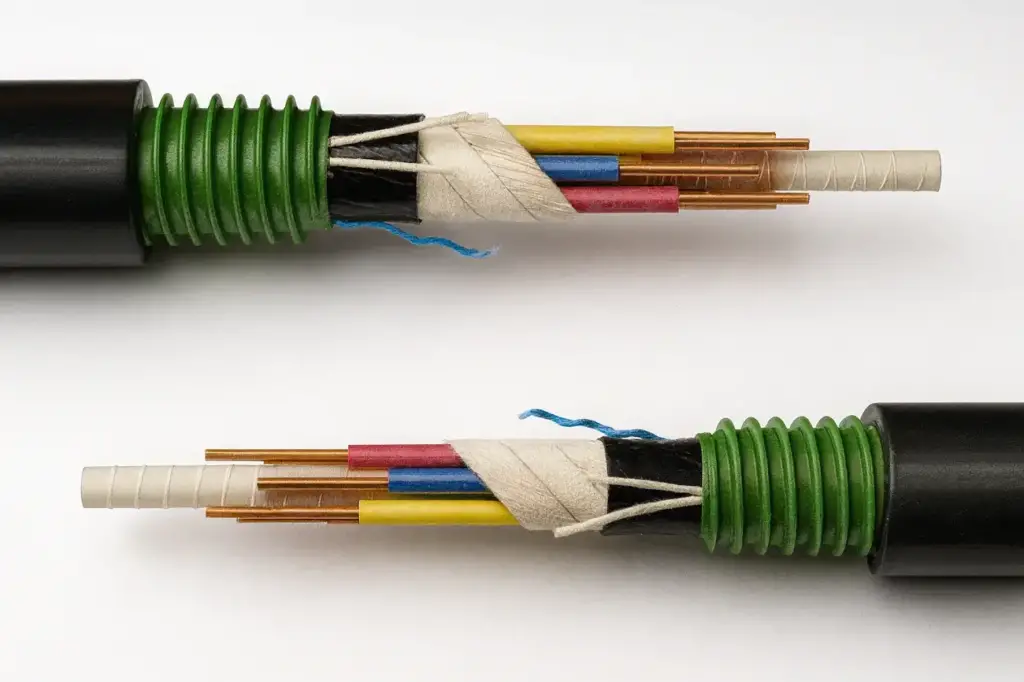
A ripcord is a technical yarn integrated longitudinally within a cable that, when pulled, allows the outer jacket to be easily cut open without using tools that might damage the insulation or internal conductors. It is a simple but crucial solution for speeding up cable installation and maintenance.
Ripcords are typically used in telecommunication cables, fiber optic cables, control cables, and industrial cables.
Polyester ripcords
High-tenacity polyester is a widely used option in general-purpose cables. Its combination of mechanical strength and flexibility makes it a cost-effective and efficient choice for standard applications.
Advantages of polyester:
- Good resistance to cutting and tensile stress
- Competitive cost
- Suitable for cables with plastic or moderately resistant jackets
- Available in multiple colors for easy internal identification
It is ideal for cables that are not exposed to extreme conditions, such as indoor installations, low-demand telecom systems, or conventional data networks.
Aramid ripcords
Aramid is a fiber with high mechanical and thermal resistance. It is used in cables that must withstand high tension, severe installation conditions, or harsh industrial environments.
Advantages of aramid:
- High tensile strength, even in thick or armored cables
- Excellent thermal performance
- Resistant to degradation from friction or pressure
- Ideal for fiber optic, underground, marine, or security cables
Due to its robustness, a single aramid thread can be used to open even reinforced jackets, preventing accidental cuts during cable stripping.
How to choose between polyester and aramid
The choice depends on the type of telecommunications cable, its location, and the mechanical requirements:
- For indoor cables or those under low tensile stress, polyester is usually sufficient.
- For outdoor, underground, or high-security cables, aramid offers superior performance.
- If cost is a determining factor, polyester is more affordable.
- If extreme mechanical strength and reliability are required, aramid is the best choice.
It is also possible to use hybrid combinations or multiple parallel ripcords to improve functionality without compromising cable design.
Technical considerations
When designing a cable with ripcords, manufacturers must consider:
- The diameter and stiffness of the yarn
- Its integration with other components (insulators, shields, fillers)
- The method of opening the cable in the field
- Compatibility with automated manufacturing processes
Both materials can be supplied in coated, waxed, or dyed versions to improve integration and performance.
Both polyester and aramid ripcords play a critical role in telecommunications cables, ensuring safe and precise installation. Each offers distinct advantages, and the choice should be based on the environment, technical requirements, and type of cable jacket.
If you are developing a new cable or need to adapt the design of an existing one, Juan Gili S.L. offers a wide range of technical ripcords made from polyester, aramid, and other fibers — customizable in diameter, color, and strength. Contact us to find the most suitable solution for your projects.