


Sustainability has become a priority in the cable industry, where traditional production can have a significant environmental impact due to its intensive use of resources and waste generation. Leading companies, such as Juan Gili S.L., are adopting innovative practices to minimize their ecological footprint and promote a greener future.
Why is it important to reduce environmental impact?
Cable manufacturing involves the use of metals such as copper and aluminum, as well as plastic materials for insulation and coating. These processes can result in:
● High CO₂ emissions
● Significant energy and water consumption
● Generation of non-recyclable waste
● Difficulties in raw material traceability
Addressing these challenges is essential to comply with environmental regulations and meet the expectations of environmentally conscious customers and communities.
Sustainable Strategies Adopted by Companies
Companies committed to sustainability are implementing various strategies to reduce their environmental impact:
1. Use of Recycled and Recyclable Materials
The use of recycled materials in cable production, such as recyclable plastics and recovered metals, is increasing, reducing dependence on virgin resources.
2. Optimization of Production Processes
The adoption of more efficient technologies allows for reduced energy consumption and minimizes waste generated during manufacturing.
3. Implementation of Environmental Certifications
Obtaining certifications such as ISO 14001 and Environmental Product Declarations (EPDs) helps companies evaluate and communicate their environmental performance transparently.
4. Design for Recyclability
Products are designed considering their entire life cycle, facilitating their disassembly and recycling at the end of their use.
Before and after implementing sustainable practices
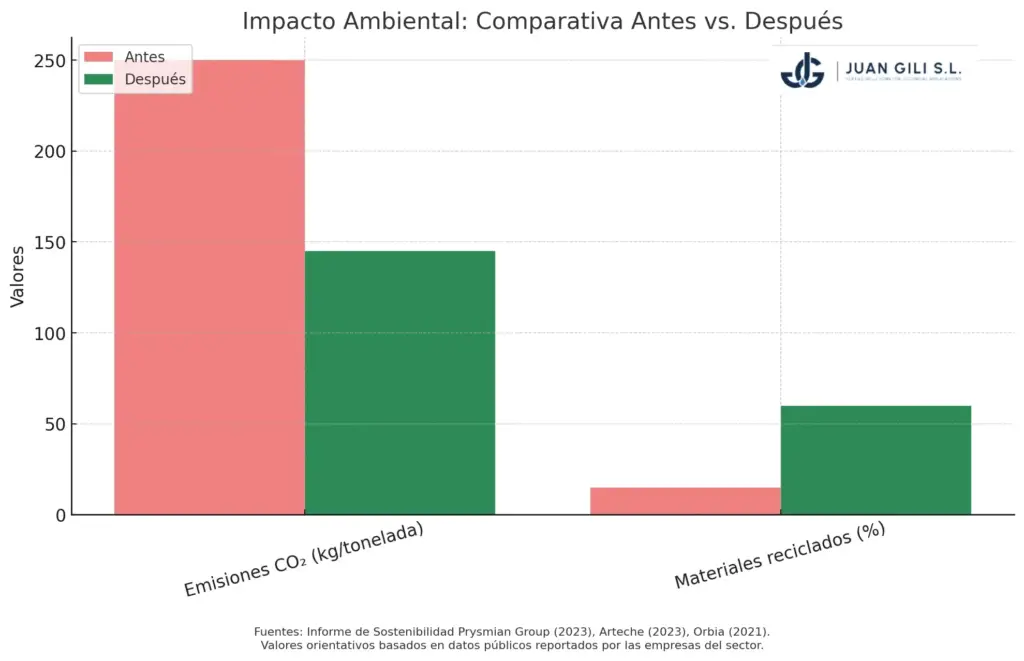
Below is a summary of the main indicators that reflect the evolution of a typical company in the cable manufacturing sector after adopting sustainable measures:
● CO₂ emissions (kg/ton):
Before: 250 kg | After: 145 kg
Significant reduction in emissions thanks to energy efficiency and the use of renewable energy.
● Percentage of recycled materials:
Before: 15% | After: 60%
The use of recycled and recyclable materials in production has increased.
● Energy consumption per unit:
Before: High | After: Medium/Low
Process optimization and improved efficiency of industrial facilities.
● Traceability of raw materials:
Before: Limited | After: Complete
Better control over the origin of materials, ensuring responsible and sustainable practices.
Our commitment
At Juan Gili S.L. We understand that sustainability is not an option, but rather a commitment to the present and the future. Therefore, through our activities in the industrial sector, we have adopted concrete measures to reduce our environmental impact and actively contribute to a more responsible production model.
We are incorporating recycled materials in the manufacturing of our products, focusing on solutions that respect the planet’s resources without compromising the technical quality that characterizes us.
Furthermore, we have worked intensively to optimize our internal processes, achieving a significant reduction in energy consumption and improving operational efficiency in our facilities.
Our commitment to the environment is also reflected in the obtaining of environmental certifications that validate our efforts and guarantee transparency in our actions.
We believe that leading by example is the best way to move toward a more conscious industry, and we will continue working every day to ensure that our technical textile solutions are also sustainable.
Toward a greener future
The transition to more sustainable practices in the cable industry is essential to protect the environment and ensure the long-term viability of the sector. Our work demonstrates that it is possible to combine efficiency, quality, and environmental responsibility, paving the way toward a greener, more sustainable future.

