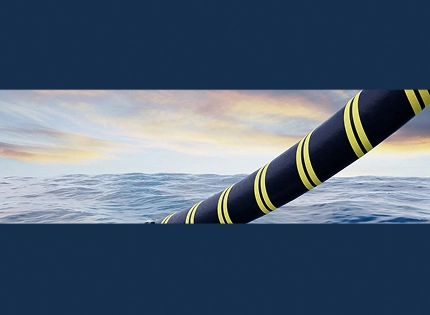
Two of Europe’s most energy-isolated nations are exploring a bold solution: a high-voltage direct-current cable running more than 1,000 kilometres beneath the Atlantic Ocean. If built, it would transform the way renewable electricity flows across Europe—and cables would be at its heart.
Europe’s energy islands
Spain and Ireland share a structural problem that few other EU members face: both are classified as “energy islands” by the European Commission. Despite generating large surpluses of renewable electricity—solar in Spain, offshore wind in Ireland—neither country has enough cross-border interconnection capacity to export those surpluses efficiently.
For Spain, the bottleneck has a name: France. The Pyrenean mountain range limits interconnection capacity to roughly 3,000 MW, representing only around 2% of Spain’s installed generation mix—well below the EU’s minimum target of 10% and far short of the 15% target for 2030.
The agreement: a memorandum of understanding
In April 2026, during the WindEurope 2026 congress held in Madrid, Spain and Ireland signed a Memorandum of Understanding to study the feasibility of a submarine electricity interconnector between the two countries. The agreement was signed by Spain’s Vice President Sara Aagesen and Ireland’s Minister Darragh O’Brien.
The MOU is the first formal step in a process that will now involve joint technical and economic evaluation by Red Eléctrica de España and EirGrid, the two national grid operators. The project would subsequently be submitted to European authorities for potential inclusion in the Projects of Common Interest list.
Technical overview: what the cable would look like
The projected route would connect the northern coast of Spain—specifically Asturias—with the southern coast of Ireland, spanning an estimated 1,000 to 1,100 kilometres. Along the way, the cable would cross significant depths in the Bay of Biscay and the Celtic Sea.
The technology of choice is High-Voltage Direct Current, the industry-standard solution for long-distance submarine interconnections. HVDC systems transmit electricity with significantly lower losses than alternating current over long distances, making them the only viable option at this scale.
The cable would require substantial onshore reinforcement as well. In Spain, the Cantabrian mountain range would need to be crossed to connect Asturias with the main solar generation hubs in the interior of the peninsula.
The energy logic: solar meets wind
The project’s underlying rationale is the complementarity of the two countries’ renewable energy profiles. Spain produces large volumes of solar electricity during daylight hours and in summer months. Ireland, driven by Atlantic weather systems, generates significant amounts of offshore wind energy.
These two generation profiles are naturally decoupled. A bidirectional cable between them allows each country to act as a buffer for the other: Spanish solar can power Dublin when the sun is shining, while Irish wind can sustain Spanish industry when Atlantic storms sweep the north.
Investment scale and timeline
A submarine cable of this length and capacity represents a major infrastructure investment. Preliminary estimates place the total cost at between €2,000 and €3,000 million. Construction, once approved, would take several years.
The project is currently at its earliest stage: the MOU commits both sides to study feasibility, not to build. From here, REE and EirGrid will conduct joint technical assessments before presenting findings to European institutions.
Why cables remain central to the energy transition
Projects like this Spain–Ireland interconnector illustrate something that is easy to overlook in discussions about renewable energy: the physical infrastructure underneath still matters enormously.
Submarine cables are complex, highly engineered systems that must withstand extreme pressure, saltwater corrosion, mechanical stress, and the need for long-term reliability with minimal maintenance access.
The components that make cables safe, durable, and functional—water-blocking elements, insulating tapes, filler cords, reinforcing yarns, mica layers—are not incidental details. They are what allow a cable to perform reliably for decades on the seabed.
JGili and the future of cable infrastructure
At Juan Gili S.L., we have been supplying specialist cable components to manufacturers across Europe for decades. We understand the technical demands that projects like this place on every element of the cable system.